%202.png)
Do You Need a Permit for a Bathroom Remodel in Los Angeles? (2026)

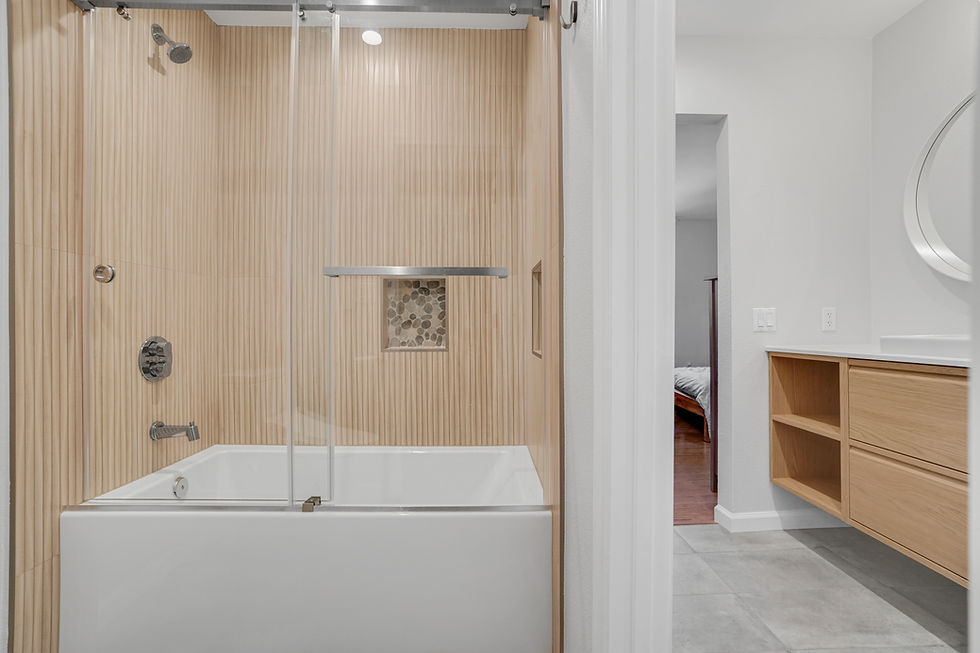
Whether you need a permit for a bathroom remodel in Los Angeles depends on what the work touches. Cosmetic, like-for-like updates generally do not require a permit. A permit is required the moment the project moves plumbing, changes electrical, adds ventilation, or moves a wall or changes the layout.
Most homeowners ask whether they need a permit at all. The more useful question is which parts of the project need one, because that is what sets the process, the cost, and the timeline. At Built to Perfection, we have pulled 356 building permits across Los Angeles and Orange County in 25 years of work, and we handle the permit on every project so the homeowner never deals with the building department directly. Below, we break down which work triggers a permit, who issues it, what it costs, and what happens if you skip it.
Which Parts of a Bathroom Remodel Need a Permit in Los Angeles?
The dividing line is what the work touches. Pure finish work is exempt. Anything that alters plumbing, electrical, mechanical ventilation, or structure and layout requires a permit.
Most homeowners come to us when they are planning a full bathroom remodel in Los Angeles, where several trades are involved at once, and that almost always lands on the permit side of the line. A simple cosmetic refresh usually does not. Here is how the two sides break down.
California's building code spells out the exempt side directly. Section 105.2 of the California Building Code exempts painting, papering, tiling, carpeting, cabinets, countertops, and similar finish work. So if you are repainting, re-tiling, or dropping in a new vanity in the same spot with no plumbing change, you generally do not need a permit.
The Fixture Swap That Surprises Homeowners
A like-for-like fixture swap still needs a permit in the City of Los Angeles. Many homeowners assume replacing a toilet, a faucet, or a water heater is just maintenance. It is not. In 25 years of pulling permits across LA, this is the rule that catches homeowners off guard most often. The Los Angeles Department of Building and Safety lists replacing plumbing fixtures and replacing water heaters as permit activities, though they usually qualify for the fast track described later.
There is a narrow exception. Clearing a clog, or removing and reinstalling the same toilet to fix a leak, is exempt. Once you replace a drain, waste, or vent pipe, or rearrange the fixtures, it counts as new work that needs a permit and an inspection. What triggers the permit is replacing or rearranging the plumbing, not simply touching a fixture.
One more thing worth knowing on older homes: when a residence built before 1994 is remodeled, California law requires noncompliant plumbing fixtures to be swapped for water-conserving ones, and shower and tub enclosures need safety glazing (tempered glass). Your contractor builds these requirements into the plan so they are not a surprise at inspection.
Which Building Department Handles Your Permit Depends on Your Address
"Los Angeles" is not one building department. Which office issues your permit depends on where the property sits.
City of Los Angeles: The Los Angeles Department of Building and Safety (LADBS) handles permits inside city limits. A non-structural bathroom remodel routes straight to the PermitLA web app with no plan review. Anything that moves walls or openings goes through ePlanLA for plan check.
Unincorporated Los Angeles County: LA County Public Works, Building and Safety issues permits for areas not inside an incorporated city. The County publishes a Service Locator where entering your street address returns the office that handles permits for that parcel.
Separately incorporated cities: Cities like Burbank, Glendale, Santa Monica, Pasadena, Long Beach, and Beverly Hills run their own building departments, with their own counters and their own fees.
The same split applies in Orange County. OC Development Services handles unincorporated Orange County, while cities like Irvine, Anaheim, Santa Ana, and Newport Beach run their own departments.
If you are not sure which authority governs your address, the County Service Locator is the fastest way to find out. If the home is inside the City of Los Angeles, LADBS is your department. For a deeper walkthrough of the city process, our Los Angeles construction permitting process guide covers it end to end.
How a Bathroom Permit Gets Pulled in Los Angeles
LADBS and its County and Orange County counterparts run two tracks. A non-structural bathroom remodel takes the fast track. Anything that moves walls or openings drops into plan review.
During the work, a straightforward bathroom permit often needs a single final inspection. More involved jobs add rough-in inspections for plumbing, electrical, and framing, where an inspector checks the work before the walls close up while everything is still open. The permit is not finished until the final inspection passes and the permit is closed out, what the building department calls "finaled." That detail matters at resale, covered below.
Bathroom Permit Cost and Timeline in Los Angeles (As of 2026)
A building permit fee is a government charge, separate from what the remodel itself costs. In Los Angeles, permit fees are valuation-based, meaning they are calculated on the declared value of labor and materials rather than charged as one flat rate. The City applies separate building, plumbing, electrical, and mechanical fees, adds a plan-check fee when plan review is required, and California layers on a few small statewide surcharges for seismic instrumentation, building-standards administration, and the green building code.
For a small permitted bathroom job, the government permit fees often run a few hundred dollars as of 2026, and scale up with valuation and any added plan check.
Because the exact number depends on your declared project value and your jurisdiction, the reliable way to price it is the official LADBS fee calculator and schedule, or the County fee schedule for unincorporated areas, rather than a figure quoted on a third-party site.
On timing, an express permit is effectively immediate, issued the same day to a few days after you apply online. A plan-check project runs a few weeks for standard review, and longer if the plans come back with corrections or the property sits in a hillside, historic, or very high fire hazard severity zone.
Keep the permit fee separate from the cost of the remodel. Our bathroom remodels start at $15,000, and the permit fee is a small, separate line item on top of the project, not part of that figure.
What Happens If You Skip the Permit?
Skipping a required permit creates exposure during construction, at resale, and in liability terms.
During construction. If the work is discovered, the building department can issue a stop-work order and require after-the-fact permitting. To verify concealed plumbing and wiring, an inspector may require opening finished walls, which means redoing finished work. The Contractors State License Board treats failure to obtain a required permit as a violation of contractor license law, with civil penalties, so a reputable contractor will not build without one.
At resale. California's Transfer Disclosure Law requires sellers of most one-to-four-unit homes to disclose known unpermitted work, and that obligation cannot be waived, even in an as-is sale. A newer rule, Civil Code section 1102.6h, effective July 1, 2024, requires sellers who accept an offer within 18 months of buying the home to disclose room additions, structural changes, alterations, and repairs made since they took title. Unpermitted bathroom work tends to surface during escrow or a buyer's inspection, where it can stall or sink a sale.
Insurance and liability. Unpermitted work can complicate a homeowner's insurance claim, because the work may not be documented as code-compliant. That is a general point, not a statement about what any specific policy will or will not cover, which is between you and your carrier.
Who Pulls the Permit: You or Your Contractor?
Either the property owner or a licensed contractor can pull the permit. The liability picture is very different depending on who signs.
As an owner-builder, you can pull your own permit, but you take on full responsibility for the project. You have to pass every inspection, and you supervise, schedule, and pay the subcontractors yourself. Using anyone other than a licensed subcontractor can make you their employer for tax and workers' compensation purposes, and unpaid subcontractors or suppliers can place a lien on your home. The Contractors State License Board lays out these owner-builder risks in plain terms, and the homeowner exemption is limited, so it is worth reading before you sign.
When a licensed contractor pulls the permit, the permit is in their name, the building-department back-and-forth is theirs, and the responsibility for the work sits with them.
That is the part of the job we take off your plate. At Built to Perfection, we pull the permit, run the plan check, schedule the inspections, and handle code compliance on every project. Permits are coordinated with our design build process, so the permit set matches the plan you approved, with nothing lost between design and the building counter. Our work is performed under active CSLB License #837987, Class B General Building. You can verify that license, or any California contractor's, using the License Check tool at CSLB.
Common Questions About Bathroom Remodel Permits in Los Angeles
Do I need a permit to replace a toilet or faucet in Los Angeles?
Yes. In the City of Los Angeles, replacing plumbing fixtures is permit work. It usually qualifies for an express permit with no plan check, so it is quick, but it is not exempt.
Do I need a permit to retile my bathroom in LA?
No, as long as it is finish work only. Retiling, repainting, and new floor coverings are exempt when no plumbing, electrical, or structural work is involved. If the retile is part of a larger job that moves a fixture or a wall, the whole project needs a permit.
Can I pull my own bathroom remodel permit in LA?
Yes, as an owner-builder, but you take on full responsibility for inspections, code compliance, and liability for the work. A licensed contractor pulls the permit in their name instead, which keeps that responsibility off you.
Start Your Bathroom Remodel With the Permits Handled
If you are planning a bathroom remodel anywhere in Los Angeles County or Orange County, we will tell you up front which parts of your project need a permit, and we handle the building department from there. After 25 years and 356 permits across the region, we know which counter applies to your address and how to keep the project moving through inspections to a clean final sign-off.
Schedule a free in-home consultation at (888) 955-0535 or info@builttoperfection.com, and we will walk through your project, the permit path it needs, and what it will take to get it done right.


