%202.png)
Top-Rated Kitchen Remodeling Contractors in Los Angeles (2026): Who Belongs on the List and Why

By Asher Ben-Haim
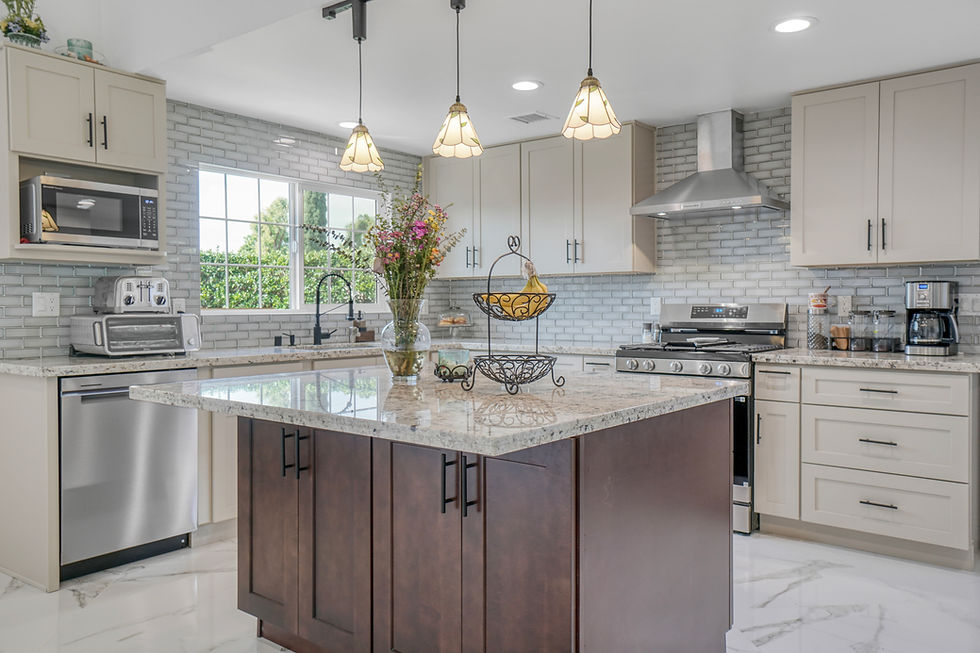
There is no independent ranking of kitchen remodeling contractors in Los Angeles. The "top contractor" lists that fill page one of Google are built on ad spend, review volume, and the business of selling homeowner leads. The companies behind them describe that plainly in their own filings with the Securities and Exchange Commission. What you can do instead is run any contractor through the public records that separate the top tier of this market from everyone else. Those records are free, they're maintained by the state and the county, and they take about twenty minutes to check.
I've run Built to Perfection since 2001, and in 25 years of building across LA and Orange County our team has put 356 building permits on the public record. Records like those exist for every licensed contractor in California, and they'll tell you more about who belongs on your shortlist than any sponsored list will. This guide covers how the LA kitchen contracting market is structured, how the page-one lists get made, the criteria a real ranking would use, and a step-by-step way to build your own shortlist. At the end, we run our own company through the same test.
The Four Types of Kitchen Remodeling Contractors in Los Angeles
When you search for kitchen remodelers in LA, you're looking at four different kinds of businesses wearing similar websites. Knowing which one you're talking to matters more than any star rating, because each type fits a different project.
Design-build general contractors
A design-build firm handles design, permits, and construction under one contract. You work with one team from the first 3D rendering through the final walk-through, and one company is accountable for the whole result. In California, this work sits under a Class B General Building license, which the state defines around projects involving at least two unrelated building trades. A full kitchen remodel, with its cabinetry, electrical, plumbing, tile, and often framing, is squarely that kind of project.
Design-build fits kitchens involving layout changes, wall removals, relocated plumbing or gas, or an electrical panel that needs upgrading to feed modern appliances. It's the model we use at Built to Perfection, and you can read how it works on our design-build process page.
Kitchen-and-bath specialists
These firms focus on cabinetry, countertops, and finish work. Many do that work well. The limits show up when the project touches structure or building systems. Some specialists hold a B-2 Residential Remodeling classification from the Contractors State License Board, the state agency that licenses contractors in California. B-2 covers work on existing homes involving three or more trades. What B-2 does not allow is structural work on load-bearing parts of the house. It also does not cover substantial changes to electrical, mechanical, or plumbing systems unless the firm holds the right additional license or brings in licensed trade subcontractors.
A specialist can be a good fit for a remodel that keeps your existing layout and upgrades the surfaces. If your project opens a wall, ask exactly who is licensed to do that part.
General remodelers
Plenty of LA contractors take kitchens as one job type among many, alongside bathrooms, additions, and repairs. Some are excellent. The question worth asking is how much kitchen-specific work is in their permit history, because kitchens punish loose sequencing more than almost any other room. Cabinets, counters, appliances, fixtures, and tile all have to arrive in the right order, and a firm that runs two kitchens a year manages that differently than a firm running twenty.
Lead-generation marketplaces and directories
The fourth category doesn't build anything. Marketplaces and directories collect your project details and sell that contact information to contractors who pay for leads, or they rank paying advertisers above everyone else. They can be a place to gather names. They are not a ranking of quality, and the next section explains why.
How the "Top Contractor" Lists on Page One Are Built
The lists that dominate a search for top kitchen remodeling contractors in Los Angeles are advertising products, and that isn't an accusation. The platforms disclose it themselves.
Angi's annual report filed with the SEC describes revenue from fees contractors pay for consumer matches, from advertising contracts, and from subscriptions (Angi Form 10-K).Yelp's SEC filings describe performance-based advertising in its search results as part of its revenue model. These are marketplaces selling placement and leads. None of them audits craftsmanship.
The lead-selling side has drawn federal enforcement. In 2023, the Federal Trade Commission ordered HomeAdvisor, the lead business affiliated with Angi, to pay up to $7.2 million (FTC press release). The order concerned misleading claims about the quality and source of the leads it sold to contractors. Some of those leads didn't come from homeowners ready to hire. Some never came through the platform directly at all.
Review counts reward whoever has been buying leads longest, filtering algorithms decide which reviews you see, and until recently fake reviews carried little legal risk. That changed in October 2024, when the FTC's rule on consumer reviews took effect (final rule). The rule bans fake and AI-generated reviews, undisclosed insider reviews, and review suppression, with penalties up to $51,744 per violation. It exists because those practices were common enough to regulate.
Then there are the "10 best contractors in Los Angeles" articles themselves, many of which are sponsored placements formatted to look like editorial reviews. The FTC's native advertising guidance warns that this format is deceptive when readers can't tell it's advertising. Few of these lists tell you.
Many of these pages also recycle stale legal facts. California raised its licensing threshold for paid construction work from $500 to $1,000 in January 2025, a change confirmed in the 2026 CSLB Law Book. A guide still quoting the old $500 figure hasn't been reviewed in years, which tells you how much weight to put on its rankings.
What a Real Ranking of LA Kitchen Contractors Would Measure
A real ranking would use signals a contractor can't buy. California happens to publish most of them. The license board referred 10,399 complaints for field investigation in fiscal year 2024-25 (CSLB enforcement report). In 2025, its enforcement teams recovered $30.2 million on behalf of the people who filed those complaints and revoked 215 licenses (CSLB 2025 report). Numbers like those are why you check every name, even the one your neighbor swears by.
Here is what to check, and where.
An active CSLB license with the right classification
Start at the state's Check a License tool. Search by license number, business name, or personnel name. The record shows whether the license is active and what it covers. It also shows the bond, whether the firm carries workers' compensation insurance, and any complaints the board is allowed to make public. For a full kitchen remodel, you generally want Class B General Building, the classification built around multi-trade projects.
Every active California contractor must carry a $25,000 license bond. Keep that number in perspective. A bond is a compliance requirement, and it's small next to what most LA kitchens cost, which is exactly why screening a contractor beats trying to recover money from one. A clean license record is necessary, and it still isn't a guarantee, since disclosure of complaints is limited by law. Treat it as the floor, then keep checking.
The name on the license matches the name on the contract
This one catches more problems than any review site. The exact business name on the CSLB record should match the name on the proposal, the contract, the insurance certificates, and the advertising. California law requires licensed contractors to display their license number in every form of advertising, including their website (CSLB advertising guidelines). A website with no license number, or a contract naming a different entity than the license, should worry you more than a beautiful portfolio should reassure you. Firms that burn a reputation can reappear under a fresh name. The paperwork trail is how you notice.
Permit history in the City of Los Angeles (LADBS)
If your home is in the City of Los Angeles, the Department of Building and Safety publishes permit records you can search online. You can search by contractor license number, and the digital records generally reach back to the 1980s. A license-number search shows you whether a contractor pulls permits and gets work inspected and finaled, meaning the city signed off at final inspection. That record beats any experience claim a website makes about itself.
Kitchen permits aren't a formality. The city's streamlined kitchen permit covers only like-for-like replacement of cabinets, finishes, counters, and fixtures. Moving walls, adding circuits, or running new plumbing requires additional permits and plan check, the city's review of your construction drawings before work starts. A contractor who habitually treats structural kitchen work as cosmetic is a contractor whose work history you want to read closely. Our guide to the Los Angeles construction permitting process walks through how that system works.
Permit history in unincorporated LA County (EPIC-LA)
Unincorporated areas of LA County run on a separate agency and a separate system. LA County Public Works issues permits through EPIC-LA, where you can pull permitting history by address or parcel and filter by permit type and status. County records in the system generally cover permits from 2018 forward, so older history may require a records request.
Don't blend the two. LADBS covers the City of Los Angeles. LA County Public Works covers unincorporated county areas. And LA County's 88 incorporated cities each run their own building departments, so a home in Burbank, Pasadena, or Long Beach means checking with that city directly.
Years of continuous operation under one name
The CSLB record shows when a license was issued. A firm that has operated under one business name and one license for 15 or 20 years is showing you something no marketing spend can fake. Every year of that history was another year a complaint could have landed. Short tenure isn't disqualifying on its own. A pattern of new entities and new license numbers behind the same faces is.
Certifications with an issuing body and a number
"Certified" means nothing without a certifier. A real credential names the issuing organization and carries a number you can verify. Restoration firms can be checked through the certified firm lookup run by the IICRC, the nonprofit body that sets and certifies restoration standards. Federal rules require firms renovating homes built before 1978 to hold EPA Lead-Safe certification, which you can confirm through the EPA's firm search. A large share of LA's housing stock is old enough that this rule covers more kitchen remodels than most homeowners expect. The same logic applies to awards. An award that names the year and category can be checked. A vague badge can't.
Design delivered before demolition starts
The most expensive change order in any kitchen is the one requested after the walls are open. That's why the sequence matters as much as the drawings. In the 2026 Houzz and Home study, 39% of renovating homeowners exceeded their renovation budget and 24% never set one. In my experience, mid-project scope changes are a leading reason budgets move.
A top-tier firm finishes design before demolition begins and has materials confirmed and ordered before demo day, so your kitchen isn't torn open and left waiting on a backordered range hood. At Built to Perfection, every design-build kitchen starts with 3D home design, so you walk through the finished space on a screen before the first cabinet comes off the wall. Here's what that looks like on a real kitchen:
No process guarantees a perfect schedule. A firm that locks design and materials before demo removes the most common reason schedules and budgets fail.
A published project minimum
Serious firms know what their smallest viable project is, and the top tier tells you before you've spent an evening on a consultation. A published minimum is a form of honesty about cost. A firm that won't name a floor until it has seen how much you want the project is negotiating, not scoping. Ask for the number early. How a contractor answers tells you plenty.
How to Build a Shortlist of Kitchen Remodeling Contractors
This is a method for narrowing a page of names down to three firms worth a consultation. It's about building the list. Interrogating your finalists face to face is a separate exercise, and we wrote a full guide on how to choose a kitchen remodeling contractor for that stage.
Collect 8 to 10 names from everywhere. Referrals, directories, portfolios you admire, the truck you keep seeing in your neighborhood. Treat every source, especially ranked lists, as raw material rather than a verdict.
Run every name through the CSLB lookup. Cut anyone whose license isn't active, whose classification doesn't cover a multi-trade kitchen, or whose advertised business name doesn't match the license record. Expect this step alone to cut the list in half.
Pull permit history in your jurisdiction. City of LA homes go through LADBS. Unincorporated county goes through EPIC-LA. Any other incorporated city goes through that city's building department. You're looking for a steady history of permitted, finaled work, ideally including kitchens.
Match the firm type to your project. Layout changes, wall removals, or system upgrades point to a design-build general contractor. A surfaces-only refresh widens the field to specialists. Cutting firms whose model doesn't fit your scope is kinder to everyone, including them.
Confirm process and minimums before booking. Ask each remaining firm two questions by phone or email. Is design completed before demolition begins, and what is your project minimum? Book consultations with the three best answers.
Twenty minutes with public records will do more for your kitchen than an afternoon reading reviews you can't trace.
How Built to Perfection Measures Against These Criteria
An article that teaches a verification method should survive it. Here is our company run through the same criteria, with nothing on the list you have to take on faith.
Behind the table, we run roughly 55 active projects at a time across LA and Orange County. This is a family company. I founded it, my son Tomer manages projects as the second generation in the business, and co-owner Roi Yehuda is our lead project manager. Recent kitchens in our remodeling portfolio include The Statement Kitchen in Los Angeles, The Executive Kitchen in Woodland Hills, and The Lightwood Kitchen in Long Beach. If you want the full picture of how we scope and build kitchens, our kitchen remodeling Los Angeles page covers the process, the pricing floor, and the questions homeowners ask most.
Kitchen Remodeling Contractor Questions Homeowners Ask
How much does a kitchen remodel cost in Los Angeles in 2026?
The 2025 Cost vs. Value analysis for Los Angeles put a minor midrange kitchen remodel at $29,765, a major midrange remodel at $86,214, and a major upscale remodel at $171,369 (2025 figures). Your number depends on scope, materials, and whether the layout changes. Our guide to kitchen remodel cost in Los Angeles breaks down the factors that move it.
Is a kitchen remodel worth the cost in Los Angeles?
Resale math favors small projects. The same 2025 Cost vs. Value data shows a minor LA kitchen refresh recouping 126.9% of its cost at resale while a major upscale remodel recoups 37.9%. Most homeowners aren't remodeling to sell, though. In the 2025 Remodeling Impact Report from the National Association of Realtors, kitchen projects recovered an estimated 60% of their cost. They also scored 9.7 and 10 out of 10 on the report's Joy Score, which measures how happy homeowners were with the finished project. Separately, 64% of remodeling homeowners said they had a greater desire to be home afterward. A full kitchen remodel is a decision about how you live, with resale as a secondary benefit.
How many licensed contractors are there in California?
The Contractors State License Board licenses roughly 285,000 contractors across 45 classifications statewide by its own count, and the state's department directory puts the figure closer to 290,000. No agency publishes an authoritative count for LA County alone. The field is large and uneven, which is exactly why verifying a specific contractor beats trusting a ranked list of them.
Put Us Through the Same Test
Look us up before you call us. Run CSLB License #837987 through the state lookup, search our permit history, and check the certification numbers above against the issuing bodies. That's the standard we think every contractor on your shortlist should meet, ours included.
When you're ready to talk about your kitchen, schedule a free consultation or call us at (888) 955-0535. We'll walk your space, talk through scope and timing honestly, and show you your finished kitchen in 3D before anyone touches a wall.


